
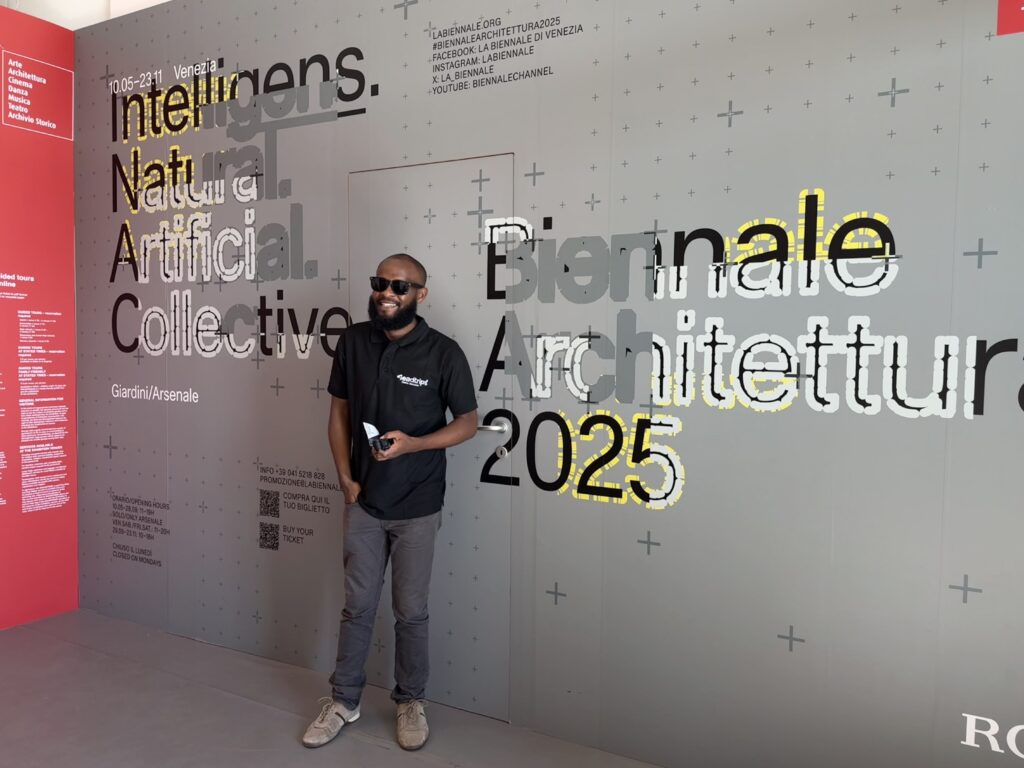
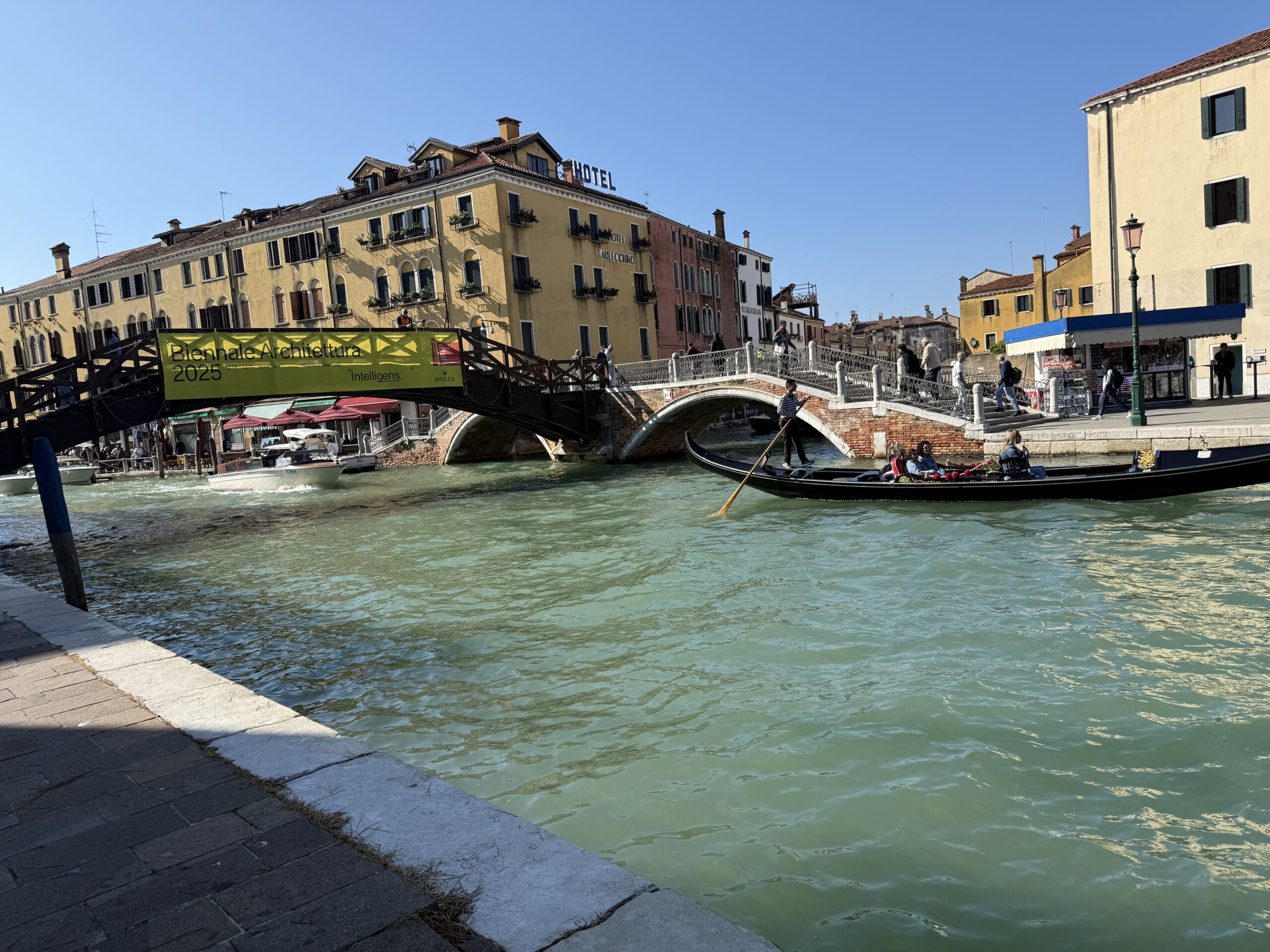
Exploration of the Venice Biennale was one for the books in our architectural trips series. Venice, also known as ‘La Serenissima’ has long been known to welcome important guests, travellers, conquerors, and explorers for centuries. This time, it was my ship’s turn to call the port of Venezia not for conquest, but for the Venice Biennale and also explore works of a Kenyan architect featuring there.
Located on the north coast of the Adriatic Sea, the dramatic descent into Venice reveals a web of canals and waterways and the icing on the cake is taking an airport transfer by water. What a moment! An arrival as memorable as the city itself.

The world’s largest architectural exhibition has grown steadily over the years, with the 2025 edition being the most visited to date. I expected to be provoked, challenged, and inspired and indeed, I had several moments of awakening. This year’s Biennale explored the convergence of three intelligences shaping the built environment today: natural intelligence, artificial intelligence, and collective intelligence.
Among the most impressive pavilions were the Hungarian Pavilion, Italian Pavilion, American Pavilion, and German Pavilion.

The Hungarian Pavilion captivated me deeply. It tackled a topic that resonates with architects across the world: What is the role of the architect today?
Inside, mannequins arranged in a studio setup collaborated on projects, while screens displayed questions from ‘society’. Clients, managers, leaders, and even influencers. Can we trust the architect? Does the architect’s opinion matter?

One prompt noted, “The influencer doesn’t like the concept.” Others echoed the increasing perception of architects as mere tools: Copy that. Extract that. Send that file…
It made me reflect on my own country’s industry, where many customers are “always right” even when they are right on the wrongs. Truly a provocative exhibition.

Further east in the Giardini, the Brazilian Pavilion explored the reinvention of the Amazonian ecosystem. As a vast natural system that defines life across South America; shaping rain patterns, fertility cycles, and hydrological systems. The pavilion featured models imagining new ways of rebuilding life and cities in the Amazon region. A powerful contribution to the climate conversation.

Another pavilion engaging sustainability was the German Pavilion, which examined the evolution of cities and rising heat levels. As you walk in, the temperature gradually increases, illustrating how heat has intensified over the last 200 years alongside population growth. A simple but impactful experience.

With over 65 pavilions spread across Venice, the one-week visit was absolutely worth it. In Part 2, I will highlight other exciting pavilions, including the American Pavilion’s take on suburban regeneration, the Austrian Pavilion’s housing models, and the Uruguayan and Canadian pavilions’ exploration of ocean life.

I hope this inspires your creative endeavours as much as Venice inspired mine.
Humphrey Mumita, Founder,ReadTrips
